

Electric vehicle (EV) batteries play a critical role in powering electric vehicles. As we strive for sustainability and lower carbon emissions, it’s worth understanding EV batteries and what sets them apart from traditional automotive batteries. However, we also must understand how to properly dispose of them to avoid turning what was supposed to help the environment into a potential hazard.
Join us as we explore the finer details of EV batteries, including how they’re made, what makes them different from traditional car batteries, their energy capacity and range, the best way to dispose of them, and much more.
EV Batteries vs. Traditional Batteries
EV batteries, unlike traditional automotive batteries, provide a sustained power supply to propel electric vehicles. Their main function is to store electrical energy that is converted into kinetic energy to power the vehicle. EV batteries use chemical reactions to store and release energy, typically through the movement of ions between electrodes.
A key difference between EV batteries and traditional automotive batteries lies in their chemistry. While traditional automotive batteries often use lead-acid chemistry, an electric car battery typically uses lithium-ion chemistry, which offers higher energy density and longer lifespan.
But there’s more than just chemistry separating EV batteries from traditional automotive batteries. Let’s dive deeper into the world of EV batteries to learn more.
Chemical Differences
First, let’s address the chemical differences. Lithium-ion chemistry involves the movement of lithium ions between two electrodes. These electrodes are typically made of graphite and a lithium-cobalt based compound.
When charging, the lithium ions are extracted from the lithium-based compound and move toward the graphite electrode and are stored there. During discharge, the lithium ions return to the lithium-based compound, which releases energy.
An electrolyte, which is a substance that allows the flow of ions between the electrodes, facilitates the ion movement. The electrolyte in a lithium-ion battery is often a liquid or a gel-like substance comprised of lithium salts and is key in maintaining the battery’s performance and safety.
Capacity and Size
Another key distinction of EV batteries is their capacity and size. Electric vehicles require tons of energy to deliver the driving range people need today. This means EV batteries must be significantly larger than traditional automotive batteries, which allows for a higher energy storage capacity and driving range.
The trade-offs for the additional size and energy capacity are EV batteries’ significantly higher weight and cost. However, battery manufacturers and automakers are working to develop lighter and more compact EV battery designs to improve efficiency and affordability.
EV batteries typically use advanced battery management systems (BMS) to monitor and optimize performance. The BMS ensures an EV battery operates within safe temperature and voltage limits, preventing damage and maximizing its lifespan. The BMS also balances the charge across individual cells within the battery pack, ensuring uniform performance and longevity.
What Are the Key Components and Materials Used in EV Battery Construction?
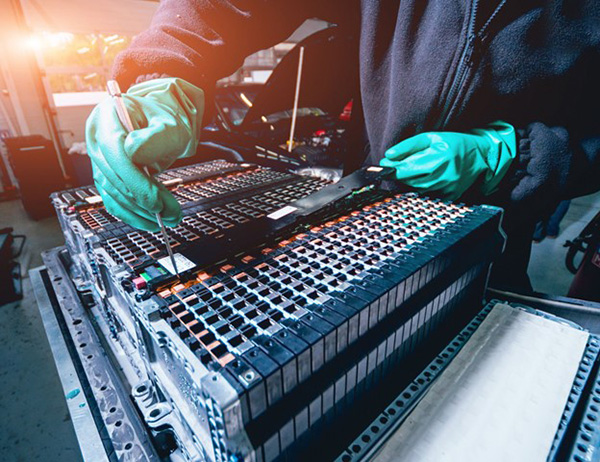
EV battery construction involves several key components and materials, including electrodes, electrolytes, separators, and a casing or container.
Active materials like lithium cobalt oxide or lithium iron phosphate comprise the electrodes and enable the ions to move during charging and discharging cycles. These active materials undergo chemical reactions that store and release energy. Let’s dive deeper into the main components of an EV battery.
Electrodes
The anode and cathode are the electrodes within the EV battery, which are the two points the electrons move between to transfer power. The anode is the negative side and the cathode is the positive side. When the battery is in use, the electrons start at the anode and move through an electrolyte until they reach the cathode. While charging, they move in the reverse direction.
Electrodes are typically made from a conductor, such as a porous carbon, with platinum or platinum alloy catalyst blended in.
Electrolyte
The electrolyte, which is made up of lithium salt dissolved in an organic solvent, is the conductive medium for ions to move between the electrodes. The electrolyte type is crucial because it impacts battery performance, safety, and lifespan. Researchers are continually exploring new electrolyte formulations to improve energy density, stability, and safety.

Separator
The separator, often made of materials like polyethylene or polypropylene, does just as its name implies — it physically separates the electrodes to prevent short circuits but still allows ions to pass through. They are the barriers that prevent direct contact between the positive and negative electrodes.
Additionally, the separator‘s porosity and thickness play a vital role in determining the battery’s power and energy capabilities. Thinner separators with smaller pores allow for faster ion transport, enhancing the battery’s power output. On the other hand, thicker separators with larger pores can store more electrolyte, increasing the battery’s energy capacity.
Casing
The final component is the casing or container. This is the protective enclosure for the battery cells that protects them from external elements and ensures their structural integrity. EV battery casing is typically steel or aluminum for durability and impact and corrosion resistance. The casing’s design will also incorporate cooling channels or vents to manage heat dissipation and maintain optimal operating temperatures.
The casing may also include safety mechanisms, such as pressure relief valves or thermal sensors, that detect and mitigate potential hazards. These safety features are crucial in maintaining the reliability and longevity of EV batteries.
How Does an EV Battery Impact an Electric Vehicle’s Range?
The size and composition of an EV’s battery pack primarily determine the vehicle’s energy capacity and range. You’ll typically see EV battery capacity measured in kilowatt-hours (kWh), which reflects the total amount of electrical energy the battery can store. The higher the capacity, the more energy the vehicle can draw upon from the battery, resulting in an increased driving range.
When determining an electric vehicle’s driving range, the battery’s energy capacity is just one piece of the puzzle, though. Other factors also come into play.
One significant factor is the vehicle’s efficiency. Automakers manufacture electric vehicles to be more energy-efficient than their internal combustion engine (ICE) counterparts. This allows them to convert a higher percentage of the stored energy in the battery into actual driving power, resulting in a longer range.
Another important factor in an electric vehicle’s driving range is weight. A heavier vehicle requires more energy to move, reducing the overall range. Manufacturers have shifted to lightweight materials and innovative design techniques and constantly strive to improve in these areas to maximize efficiency and range.
Aerodynamics also plays a significant part in an electric vehicle’s driving range. A sleek and aerodynamic design reduces wind resistance, allowing the vehicle to move more efficiently. In turn, this can reduce the energy required to maintain a certain speed, which can extend the EV’s driving range.
Finally, the overall efficiency of the vehicle’s powertrain plays a significant role. For example, a Nissan Leaf, which has a lower-power motor designed for efficiency, can deliver more range with less energy than a Porsche Taycan.
What Are the Different Types of EV Batteries and How Do They Compare?
Battery electric vehicles (BEVs), plug-in hybrid electric vehicles (PHEVs), and hybrid electric vehicles (HEVs) have grown in popularity as sustainable and efficient modes of transportation. One key component making this possible is the battery. But EVs have more than one type of battery, each with advantages and limitations. Let’s take a closer look at some of the most common types of EV batteries.
Lithium-Ion Batteries
Electric vehicles often use lithium-ion batteries as they offer high energy density and long lifespans. These batteries have lithium-ion modules that store and release energy through a chemical reaction. A key advantage of lithium-ion batteries is their balance of energy capacity, weight, and cost, making them a popular option among manufacturers and consumers.
Lithium-ion batteries have another advantage: a low self-discharge rate. Batteries, by nature, slowly discharge — even when they’re not in use. This low discharge rate means they retain their charge longer when not in use. This is a huge benefit for EV owners who don’t use their vehicles daily.
Finally, lithium-ion batteries can be charged quickly at a wide range of EV charging stations or even with a home charger. This allows for shorter charging times and more convenience. Many are even compatible with fast charging stations, which are capable of recharging a battery in mere minutes.
Nickel-Metal Hydride (NiMH) Batteries
While less common in newer EV models, you may still find nickel-metal hydride batteries in some hybrid electric vehicles. As the name implies, NiMH batteries use a combination of nickel, metal hydride, and other materials to store and release energy.
While they may not have the energy storage capacity of a lithium-ion battery, NiMH batteries have a higher energy density compared to traditional lead-acid batteries. This leads to better efficiency and performance in hybrid vehicles. They also have a longer lifespan.
A final benefit is that NiMH batteries are generally less expensive than lithium batteries, making them ideal for lower-cost hybrid vehicles.
NiMH batteries have one critical limitation: a lower energy density than lithium-ion batteries. This means that EVs and PHEVs equipped with NiMH batteries may have a shorter driving range and require more frequent charging.
Solid-State Batteries
While they are still undergoing research and development, solid-state batteries may be the future of electric vehicles. This battery technology uses solid electrolytes instead of liquid or gel-like electrolytes found in lithium-ion batteries. It has the potential to offer higher energy density, faster charging times, and better safety compared to traditional lithium-ion batteries.
A key advantage of solid-state batteries is they can operate at higher temperatures without risking thermal runaway, a phenomenon that can cause battery fires. This increased safety is particularly important in the automotive industry, where battery safety is a top priority and EV fires are scrutinized. Also, solid-state batteries may have a longer lifespan and better performance in extreme low or high temperatures.
Also, because solid-state battery packs may have greater energy density than lithium-ion packs, automakers can install smaller, lighter batteries. This reduced weight can play a big role in enhancing driving range.
How Are EV Batteries Discarded or Recycled at the End of Their Life Cycle?
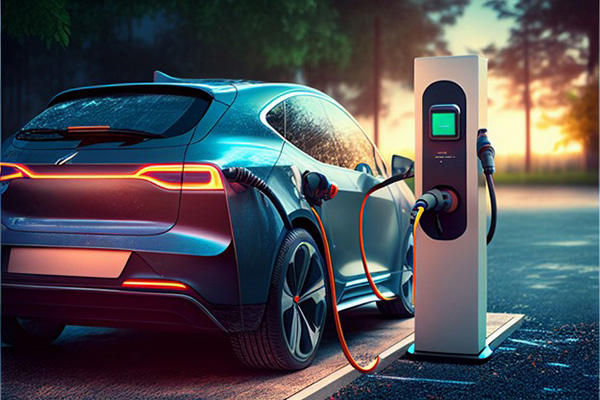
One big question about EV batteries is what happens at their end of life. How can we sustainably dispose of them? Is there a way to recycle them so they have a second life? There’s been much advancement in this area and researchers continue looking for ways to make the end of a battery’s life more eco-friendly.
Proper battery disposal and battery recycling are critical to minimize their environmental impact. EV batteries are hazardous waste and must be handled and disposed of according to strict regulations. Many EV manufacturers have partnerships with specialized recycling facilities that manage the end-of-life batteries in an environmentally responsible manner.
EV battery recycling typically involves disassembling and separating various components, such as metals and electrolytes. These facilities extract and reuse valuable materials like lithium, cobalt, nickel, and aluminum to produce new batteries or other products in various industries. This process conserves valuable resources in the supply chain and reduces the release of harmful substances into the environment.
At the end of its life cycle, an EV battery undergoes a series of steps to ensure proper disposal or recycling. Let’s review these steps.
Battery Collection
First, the batteries are collected from various sources, such as car manufacturers, dealerships, and battery service centers.
Battery Inspection and Classification
Next, the batteries head to recycling facilities equipped with specialized machinery and processes. Here, the facilities carefully inspect the batteries to determine their condition and recycling potential. Functional batteries or those with significant remaining capacity may go through refurbishing and conversion for other applications, such as renewable energy storage systems.
External Disassembly and Recycling
If the batteries cannot be repurposed, the recycling process begins with removing and recycling or disposing of external components, such as casings and connectors. The rest of the battery pack is then disassembled to access the individual cells.
Battery Cell Disassembly and Recycling
The facility then processes the disassembled cells to extract valuable materials. In this process, they shred or crush the cells to break them down into smaller pieces. They then subject the cells to various techniques, such as mechanical separation, hydrometallurgical processes, and pyrometallurgical processes, to separate and recover different metals and electrolytes.
In mechanical separation, the facility uses different techniques like sieving, magnetic separation, and flotation to separate the different components — e.g., metals, plastics, and electrolytes. Using this process ensures the recycling facility properly recycles and disposes of each material to minimize waste and maximize resource recovery.
Metal Refining
After being separated, the recovered metals go through additional refining to remove impurities and prepare them for reuse.
Electrolyte Treatment and Recycling
The recovered electrolytes go through a different process that includes treating them for reuse in new batteries or other chemical applications. Proper electrolyte treatment and disposal can prevent environmental contamination and ensure the safety of the recycling process.
Hazardous Waste Disposal
Once the facility has extracted the valuable materials, it then carefully manages any remaining waste or byproducts. Hazardous materials are disposed of according to strict regulations that prevent harm to human health and the environment.
EV Batteries: More Than Meets the Eye
With the urgency to reduce our carbon footprint, it’s no wonder that electric vehicles are becoming more of a common sight on roads worldwide. While EVs can help folks lower carbon emissions, not everyone knows how EV batteries are actually made or function. With the urgency to reduce our carbon footprint, it’s no wonder that electric vehicles are becoming more of a common sight on roads worldwide. While EVs can help folks lower carbon emissions, not everyone knows how EV batteries are made or function.
As technological advances continue, EV batteries will evolve and become more power-dense, compact, and lighter. As such, we could very well be on our way toward making EVs feasible replacements for all types of drivers. The next big innovation may find its way to your garage or driveway sooner than later.
Brought to you by justenergy.com
All images licensed from Adobe Stock.

